

Picture this:
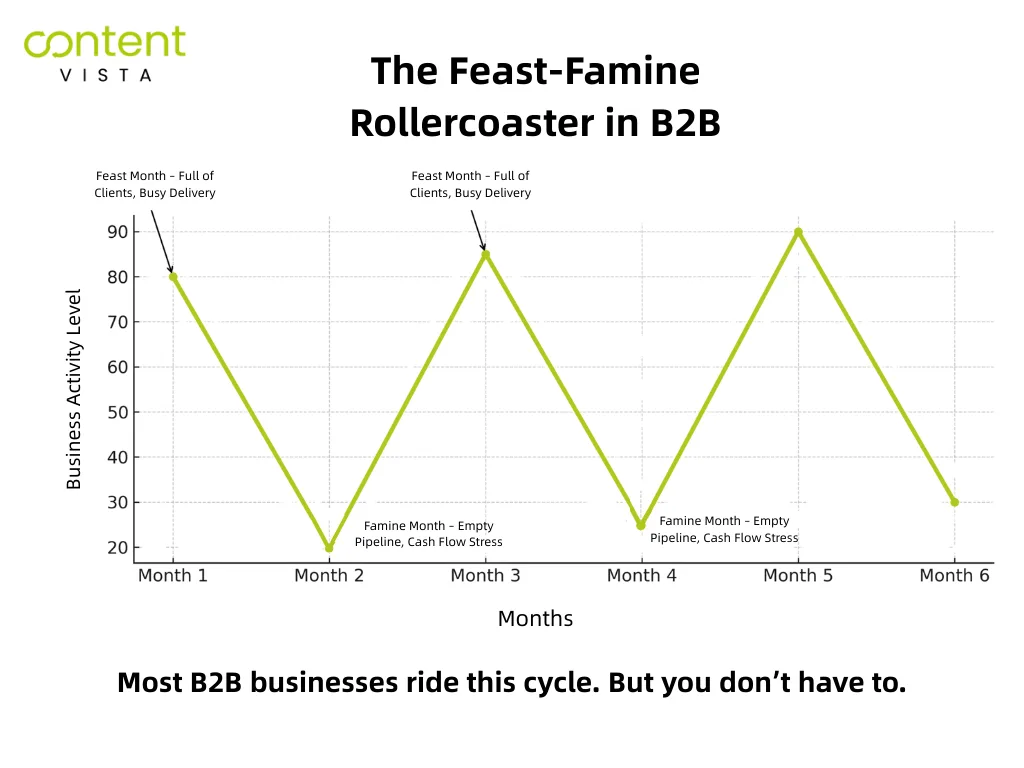
One month, your inbox is flooded with inquiries, your calendar is stacked with demos, and you’re scrambling to deliver on new client projects.
Next month? Silence. No new deals, no follow-ups, no warm introductions.
Let’s call it what it really is: the feast-famine cycle.
This constant back-and-forth isn’t random—it’s a pattern.
Suddenly, you’re staring at an empty pipeline, nervously refreshing your CRM, and wondering whether to chase referrals or slash ad spend just to keep cash flow steady.
Sound familiar?
This is the classic feast-famine cycle — the bane of countless B2B businesses.

Whether you’re a consultant juggling projects, an agency founder dependent on referrals, or a SaaS startup scaling with inconsistent marketing, you’ve likely felt this rollercoaster.
And let’s be honest: it’s exhausting. The high of the “feast” is quickly overshadowed by the anxiety of the “famine.”
You work harder, hustle more, and hope the next referral or deal magically appears. But deep down, you know this isn’t sustainable.
The truth is: the feast-famine cycle isn’t just stressful — it’s dangerous. It eats away at cash flow predictability, erodes team morale, and forces leaders into short-term firefighting rather than long-term strategy.
But here’s the good news: there is a way out. With the right systems in place, B2B businesses can build predictable, compounding growth engines that keep the pipeline flowing — month after month.
👉 If you’ve ever whispered to yourself, “There has to be a better way,” you’re in the right place. Keep reading.

So, what exactly is the feast-famine cycle in B2B businesses?
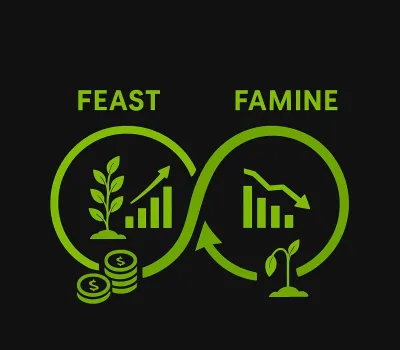
In simple terms: it’s the endless loop of alternating between overflowing work one month (“feast”) and pipeline droughts the next (“famine”).
One month you’re delivering projects non-stop, the next you’re scrambling to find new deals.
This happens because most businesses fall into a reactive pattern:
- When there’s plenty of client work, all marketing and prospecting stops.
- When delivery slows, the panic button is hit, and a desperate push for leads begins.
- This short-term rush sometimes brings in results — but only temporarily — before the cycle repeats.
Every founder, consultant, or agency owner recognizes this rollercoaster:
- Consultants book back-to-back workshops one quarter, then struggle to fill their pipeline the next.
- Agencies win a big client, shift all focus to delivery, and wake up three months later to realize new business has dried up.
- Startups close a few deals after an investor push, only to face weeks of silence when the initial buzz fades.
The problem isn’t the amount of opportunity in the market — it’s the lack of consistent, proactive demand generation. Without a system, most businesses are at the mercy of referrals, word-of-mouth, or short bursts of outreach.
Here’s the key insight:
 The feast-famine cycle is not just a phase of early-stage businesses. Left unchecked, it becomes a recurring trap that even established B2B companies fall into.
Recognizing this pattern is the first step to breaking it. Because once you name it, you can start building the systems to replace it with predictable, repeatable growth.

 Ready to break the feast-famine cycle once and for all? Book your free strategy session today
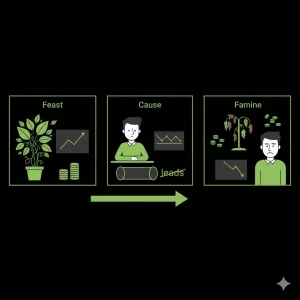
Here are the three biggest culprits:
1. Overreliance on Referrals or a Single Channel
Many businesses start strong with referrals — and for good reason. Warm introductions close faster, and word-of-mouth feels effortless. But here’s the catch: referrals are unpredictable. You can’t control when or how often they come in.
Likewise, leaning on a single channel (say, LinkedIn posts or cold email blasts) leaves your growth vulnerable. The moment that channel dries up, so does your pipeline. For example:
- A SaaS founder depends only on LinkedIn DMs for demos. A small algorithm change cuts visibility, and suddenly demo requests plummet.
- A consulting firm thrives on referral projects, until a key client moves on — leaving a gaping hole in their revenue forecast.
👉 Predictable growth requires diversification. Relying on one source of leads is like trying to balance a table on a single leg.
2. Lack of Consistent Marketing Investment
During “feast” months, marketing is often put on hold — after all, who has time to write blogs or run campaigns when client work is overwhelming? Then, during “famine” months, marketing budgets are slashed or restarted in panic.
This stop-start approach creates zero momentum. Marketing compounds only when done consistently. Without that compounding effect, businesses are always “starting over” instead of building a flywheel.
3. Short-Term Fixes vs. Long-Term Systems
Too often, leaders treat marketing like a band-aid. Quick ad campaigns, aggressive discounts, or rushed outreach bring short-term spikes, but don’t build a sustainable pipeline.
The problem? These short-term fixes don’t compound. Once the ad spend stops, the leads vanish. Once the “panic hustle” ends, the silence returns.
👉 The businesses that escape the feast-famine cycle do one thing differently: they build long-term systems — multi-channel engines powered by automation, data, and consistent messaging.


Here’s how:
1. Cash Flow Unpredictability
Ask any founder what keeps them up at night, and cash flow is often at the top of the list. Inconsistent revenue from month to month makes it impossible to:
- Forecast expenses with confidence
- Hire and retain talent
- Plan for growth investments
When one month is strong but the next is dry, the financial seesaw forces leaders into reactive decisions — dipping into reserves, delaying payments, or cutting back on growth initiatives.
Predictable cash flow is the lifeblood of scaling, and the feast-famine cycle cuts it off at the source.
2. Stress & Poor Decision-Making
A rollercoaster pipeline doesn’t just hurt the bank account — it hurts the mindset of leadership.
When the famine sets in, stress levels spike. Leaders begin making decisions out of fear rather than strategy.
Instead of sticking to a long-term plan, they:
- Chase any lead that comes their way, even if it’s not the right fit
- Slash marketing or sales spend at exactly the wrong time
- Take on low-margin projects just to “keep busy”
This cycle doesn’t just wear down leaders — it burns out entire teams.
Talented employees lose morale when they’re stuck in feast-mode chaos one month and famine-mode desperation the next.
3. Missed Opportunities During “Feast” Months
Ironically, the feast period — when business is booming — is when many opportunities slip through the cracks.
Why?
Because all hands are on delivery, and business development gets sidelined.
That big conference you planned to attend? Skipped.
That content calendar you mapped out? Forgotten.
That follow-up with a warm lead? Left unread in the inbox.
By the time delivery slows down, the window for those opportunities has closed, and the cycle begins again.
👉 The result: businesses are always playing catch-up, never building the steady pipeline that fuels sustainable growth.


Here’s how it manifests across different types of businesses:
Consultants & Coaches
Independent consultants often thrive on a handful of high-ticket projects. One referral or corporate training contract can keep the lights on for months. But when that engagement ends, many face a dry spell.
- One month: back-to-back workshops, fully booked calendar.
- Next month: no new contracts, endless outreach emails, and pipeline anxiety.
Without a steady inflow of prospects, consultants live in a cycle of “busy delivering” versus “desperately hunting.”
Agencies & Professional Service Firms
Agencies often celebrate landing a large client — and rightly so. But that win can become a trap. Focus shifts entirely to delivery, and new business efforts take a back seat.
By the time the project wraps up, there’s no warm pipeline to replace it. Suddenly, the agency is left scrambling for new work, discounting proposals, or chasing clients outside their ideal profile just to fill capacity.
This is why many agencies ride a rollercoaster of overwork followed by underutilization.
Startup Founders
Startups face their own version of the feast-famine cycle. After raising funding or closing initial deals, founders often experience a brief “feast” of activity. But when the buzz fades, growth stalls.
- Sales teams wait for inbound leads that never arrive.
- Marketing gets deprioritized in favor of product development.
- Investors start asking tough questions about pipeline predictability.
For startups, the danger isn’t just cash flow — it’s investor confidence. Without predictable traction, the next round of funding becomes harder to secure.
The Common Thread
Different players, same problem: inconsistent lead flow creates an unstable foundation for growth.
The solution isn’t to hustle harder. It’s to shift from random bursts of activity to a systematic growth engine that feeds the pipeline every single month.
Ready to break the feast-famine cycle once and for all? Book your free strategy session today.
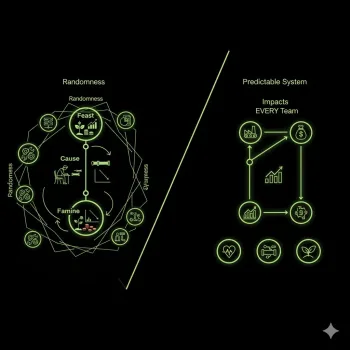
Instead of treating growth as a series of ad-hoc campaigns, one-off pushes, or lucky referrals, they invest in building systems that:
- Generate leads consistently
- Nurture relationships over time
- Turn cold outreach and brand awareness into warm, qualified opportunities
From “Hope Marketing” to Reliable Engines
Most B2B leaders unknowingly rely on “hope marketing.” They hope the last client will refer them to the next one. They hope a single channel (like LinkedIn posts or cold email) will bring in enough leads. They hope ad spend will magically convert when the funnel isn’t set up right.
But hope is not a strategy.
👉 What successful B2B businesses do differently is design a growth engine that works every month, regardless of seasonality or founder bandwidth.
Predictability Means Compounding
Predictable systems don’t just bring in leads — they compound over time.
- Every new piece of content builds authority in the market.
- Every CRM automation saves hours while nurturing hundreds of leads at once.
- Every retargeting ad warms up your brand for the next sales conversation.
Over weeks and months, these small, consistent efforts add up — creating a pipeline that doesn’t start from zero every quarter, but grows stronger as it compounds.
The Mindset Shift
Escaping feast-famine isn’t about hustling harder — it’s about working smarter. Leaders must think less like firefighters reacting to emergencies and more like architects designing scalable systems.
That’s when businesses stop riding the rollercoaster and start cruising on a predictable track.

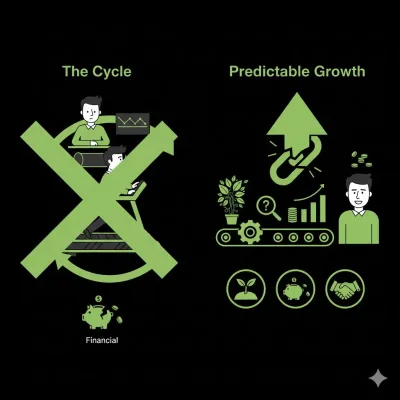
Here are the pillars that break the cycle:
1. Build a Predictable Growth Engine
At the heart of sustainable B2B growth is a growth engine — a structured system that continually attracts, nurtures, and converts prospects into opportunities.
Unlike “campaigns,” which start and stop, an engine is always running in the background.
Key ingredients of a growth engine:
- Clear Ideal Customer Profile (ICP) definition
- Messaging hierarchy that speaks to customer pain points
- Systematic outreach + inbound nurturing
- Metrics tied to pipeline health, not just vanity numbers
Think of it as moving from “random sparks” of activity to a flywheel that compounds over time.
2. Embrace Multi-Channel Marketing
Predictability comes from diversification. If referrals dry up, another channel should step in to keep the pipeline moving.
That means building a multi-channel demand generation system that works in sync:
- LinkedIn outreach & thought leadership → build authority, start conversations
- Cold email campaigns → precise, scalable outreach to decision-makers
- Paid Ads (Google, LinkedIn, Meta) → capture demand and retarget warm leads
- Content marketing → blogs, guides, case studies that establish expertise
- CRM + Automation → ensure no lead slips through the cracks, and nurturing never stops
The most successful B2B brands aren’t “all in” on one channel.
They orchestrate all of them so that each touchpoint builds trust and momentum toward a call.
3. AI-Powered Consistency + Human-Led Strategy
Technology alone won’t break the cycle, but when combined with human creativity, it becomes unstoppable.
- AI ensures consistency → automating follow-ups, optimizing ad performance, segmenting audiences, and generating insights at scale.
- Humans ensure connection → crafting stories, building trust, and making strategic decisions that algorithms can’t.
Together, AI + human strategy eliminate the randomness of outreach while preserving the authenticity of relationships.
The Result: Compounding Growth
When these three pillars work together, the rollercoaster finally stops. Instead of:
- feast months that drain your team, and
- famine months that drain your confidence,
…you get a steady pipeline of qualified opportunities that grows stronger each quarter.
This is how B2B businesses escape the cycle and step into predictable, scalable growth.

Ready to break the feast-famine cycle once and for all? Book your free strategy session today.

Breaking the feast-famine cycle isn’t about quick hacks. It’s about building a system that keeps your pipeline full even while you’re busy serving clients.
That’s exactly what we help B2B businesses, agencies, and startups do at Content Vista.
We don’t just run ads or churn out content.
We design and implement growth systems that bring predictability into your sales pipeline.
Here’s how our approach works:
1. Diagnose First, Then Prescribe
Most agencies ask, “What do you want us to do?” We flip the question: “Where is your funnel leaking?”
Our process starts with market research, ICP definition, and messaging clarity. This helps us uncover:
- Who your ideal buyers really are
- Where your funnel is breaking down
- Which channels are underutilized
This diagnostic lens ensures we’re fixing the right problems — not just adding more noise.
2. Build the Growth Engine
Once the gaps are clear, we architect your predictable growth engine. That means:
- LinkedIn Growth Engine → outreach + thought leadership
- Cold Email Conversion Lab → personalized, automated prospecting
- Paid Ads → targeted campaigns across Google, LinkedIn, Meta
- Content & SEO → inbound authority, compounding traffic
- CRM & Automation → no lead falls through the cracks
Each part works together so your pipeline flows consistently, not sporadically.
3. Scale with AI + Human Expertise
We leverage AI for consistency (automated nurturing, ad optimization, targeting precision) and human creativity for connection (storytelling, positioning, strategic judgment).
This dual approach makes your system both scalable and authentic.
Why This Matters
The result? Our clients stop relying on referrals or “random acts of marketing.”
Instead, they build compounding momentum:
- Predictable qualified leads month after month
- Reduced CAC and healthier LTV ratios
- More confident forecasting and better investor conversations
It’s not about hustling harder. It’s about having a partner who builds the systems so you can focus on growth.

Ready to break the feast-famine cycle once and for all? Book your free strategy session today.

When you move from random outreach and hope-driven marketing to a systemized, multi-channel growth engine, everything changes.
Cash flow stabilizes. Stress levels drop. Investor and client confidence grows.
Most importantly, your business stops lurching from one extreme to the other and starts building momentum that compounds over time.
The choice is clear: you can keep riding the rollercoaster, or you can get off and build the tracks for steady, predictable growth.
At Content Vista, we’ve helped B2B businesses and startups break free from this cycle and unlock the clarity that comes with a predictable pipeline.
Not through gimmicks or one-off campaigns, but by architecting growth systems that work every single month.
Now it’s your turn.

Ready to break the feast-famine cycle once and for all? Book your free strategy session today.